Garud Commandos of the Air Force: Structure, Training, and Strategic Role
The Garud Commando Force represents the special operations unit of the Indian Air Force, designed to execute high-risk missions that require precision, speed, and advanced combat capabilities. As one of the youngest special forces units in India, the Garuds have rapidly evolved into a critical component of modern air warfare and national security strategy.
1. Introduction
The Garud Commando Force was conceived in 2002 and officially established in 2004 to address emerging security challenges, particularly the protection of critical air force installations.
Unlike conventional military units, the Garuds are specifically trained for air force-centric operations, including counter-terrorism, combat search and rescue, and special reconnaissance missions.
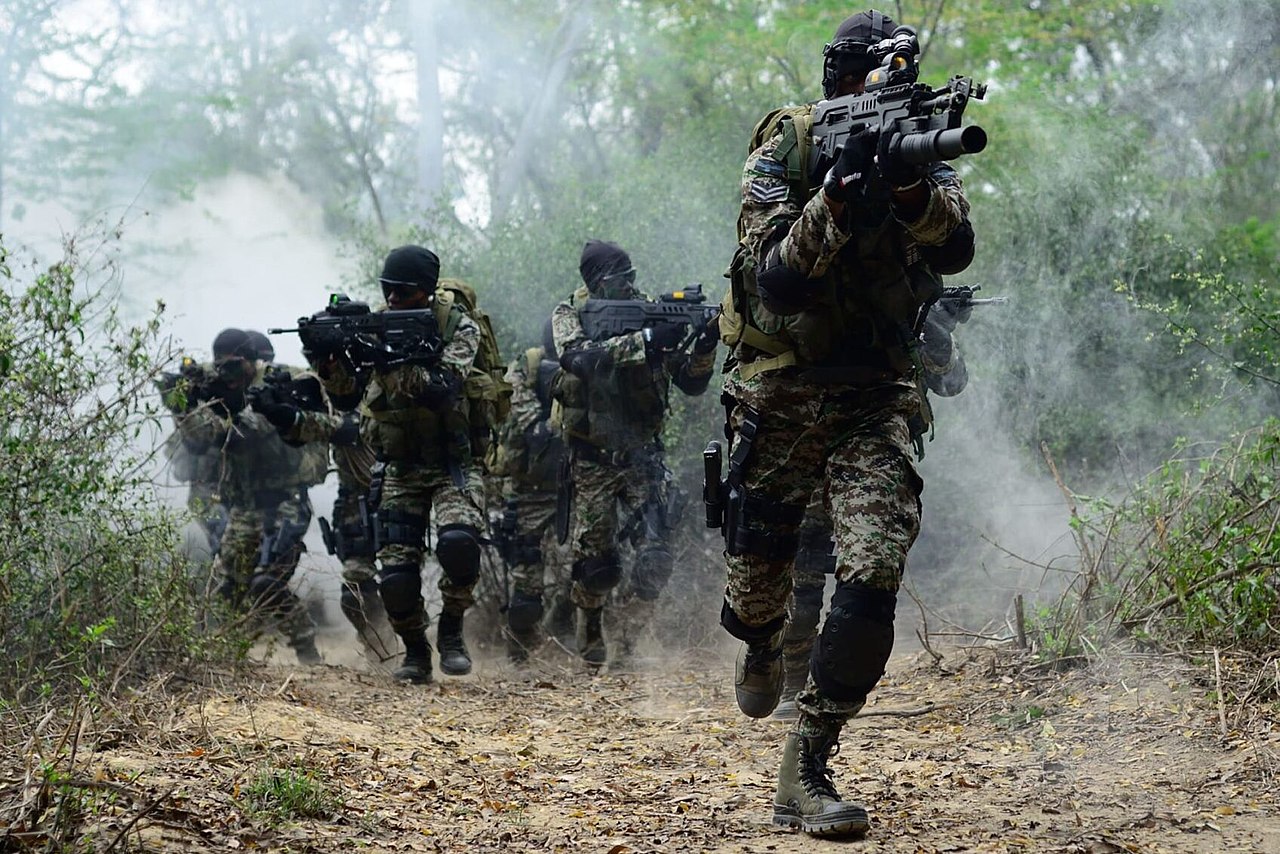
Garud Commandos during operational deployment showcasing tactical readiness
2. Organizational Structure
The Garud Commando Force is organized into multiple operational units known as “flights,” each consisting of approximately 60–70 personnel and led by commissioned officers.
These units are strategically deployed across air force stations to ensure rapid response capabilities. The force structure is designed to maintain flexibility, allowing Garud teams to operate independently or in coordination with other branches of the armed forces.
3. Training and Selection Process
Selection into the Garud Commando Force is highly competitive and involves direct recruitment through air force channels. Candidates undergo rigorous physical and psychological screening, followed by an extensive training program.
The training duration extends beyond one year and includes probation, airborne training, special operations, survival techniques, and advanced weapons handling.
In advanced phases, trainees are exposed to real operational environments and joint training exercises with other elite units, ensuring comprehensive combat readiness.

Garud Commandos undergoing specialized training in combat and tactical operations
4. Operational Roles and Responsibilities
The Garud Commandos perform a wide range of missions that are essential to air force operations. These include direct action, special reconnaissance, and the protection of critical air bases and assets.
They are also tasked with rescuing downed pilots in hostile territories and establishing operational airbases in contested environments. Additionally, Garuds assist in guiding airstrikes using laser designation and evaluating mission outcomes. :contentReference[oaicite:5]{index=5}
5. Strategic Importance in Modern Warfare
In contemporary warfare, where air superiority plays a decisive role, the Garud Commandos act as a force multiplier. Their ability to operate in hostile environments ensures the protection and effectiveness of air operations.
Their integration with advanced air systems and rapid deployment capabilities make them indispensable in both offensive and defensive military strategies.

Garud Commandos participating in large-scale military exercises demonstrating operational capability
6. Evolution and Future Prospects
Since their inception, the Garud Commandos have continuously evolved in response to changing security dynamics. Their roles have expanded from base protection to complex special operations and international peacekeeping missions.
Future developments are expected to focus on enhanced technological integration, specialized training modules, and increased operational strength to meet emerging threats.
7. Conclusion
The Garud Commando Force stands as a vital element of the Indian Air Force’s operational framework. Through specialized training, strategic deployment, and advanced capabilities, the Garuds exemplify the modernization of military special forces in the 21st century.
Their role in safeguarding national security and enabling air operations highlights their importance in the evolving landscape of global defense and intelligence.



