At What Distance Could China's J-35 Detect the Su-57 and Rafale? Understanding Radar Cross Section, AESA Radar, and Electronic Warfare
Why Is Detection Range So Important?
In modern air combat, the first aircraft to detect its opponent can often:
- Launch long-range missiles earlier.
- Choose whether to engage or disengage.
- Coordinate with friendly aircraft.
- Exploit surprise and favorable positioning.
However, radar performance depends on multiple variables, including target size, orientation, altitude, atmospheric conditions, electronic warfare, and signal processing. As a result, any quoted detection range should be viewed as an estimate rather than a guaranteed operational value.
- J-35 GaN X-band AESA radar detects a 1.0 m² target at 180 km.
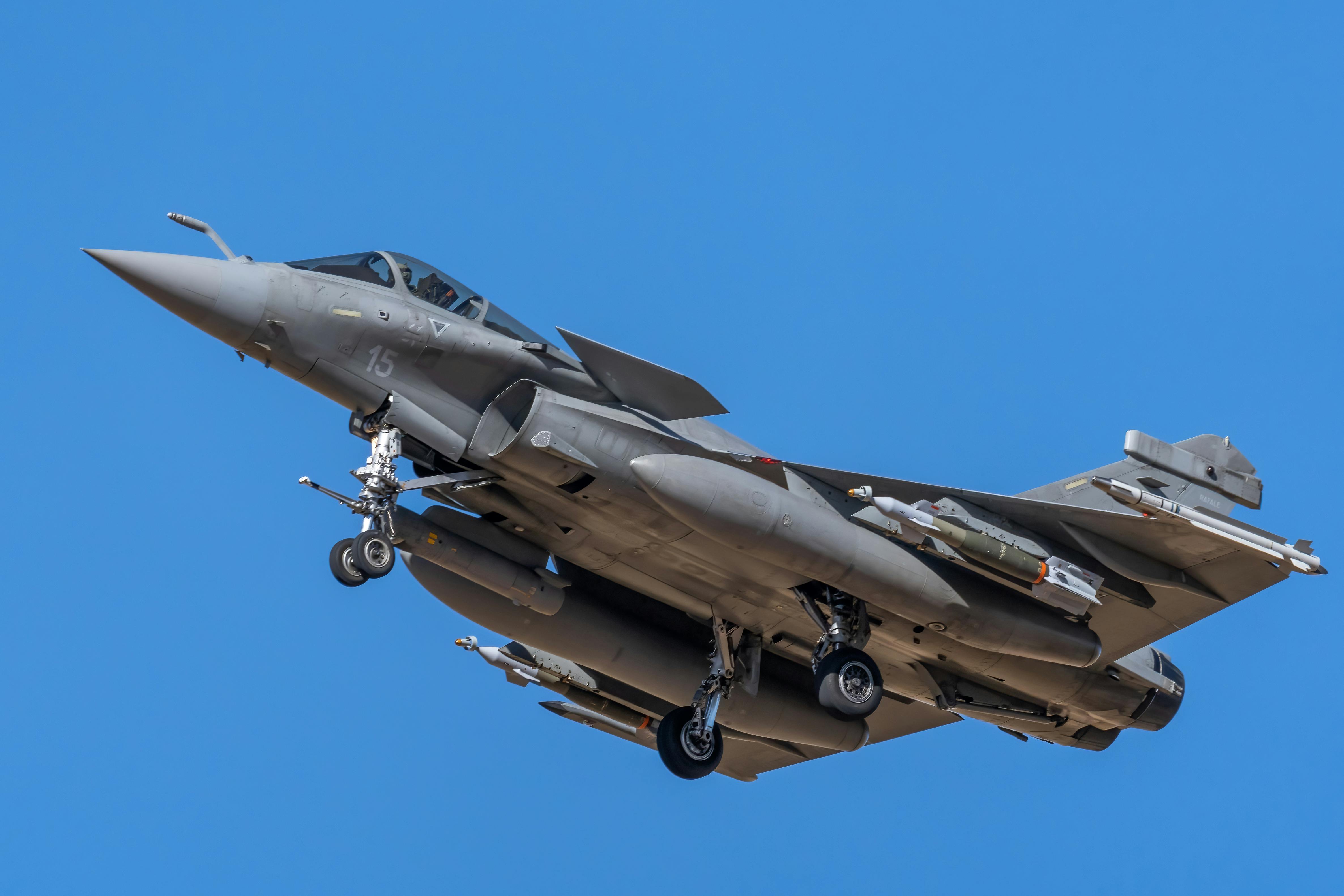
- Assumed Rafale RCS = 1.0 m² (fully loaded).
- Assumed Su-57 RCS = 0.5 m².
- Both aircraft initially operate without active jamming.
Detection Under Emissions-Silent Conditions
When neither aircraft is transmitting jamming signals, radar detection is primarily influenced by the target's effective radar cross section.
Using the assumptions above, the estimated detection ranges are:
| Target Aircraft | Assumed RCS | Estimated Detection Range |
|---|---|---|
| Fully Loaded Rafale | 1.0 m² | ≈ 180 km |
| Su-57 | 0.5 m² | ≈ 150 km |
The reduction in detection range for the Su-57 reflects its assumed lower radar cross section, which decreases the strength of the radar echo returning to the J-35.
What Changes When Electronic Warfare Is Activated?
In actual combat, aircraft are unlikely to remain electronically silent.
Modern fighters activate sophisticated Electronic Warfare (EW) systems that attempt to reduce an enemy radar's effectiveness through techniques such as deception, interference, or signal manipulation.
Rather than relying solely on the radar equation, detection may depend on the radar reaching its burn-through range—the approximate distance at which the radar's return signal becomes strong enough to overcome the effects of jamming.
Scenario 1: Rafale with the SPECTRA EW Suite
The SPECTRA electronic warfare suite is widely recognized as an advanced integrated self-protection system.
Open-source discussions describe it as combining threat detection, situational awareness, and multiple electronic countermeasure techniques. Some sources also discuss advanced deception methods, though many operational details remain classified.
Assuming an illustrative degradation of approximately 50% to 60% in effective tracking range for this scenario, the estimated burn-through range becomes:
- Estimated Burn-Through Range: 72–90 km
This estimate should not be interpreted as an official or verified performance figure.
Scenario 2: Su-57 with the L402 Himalayas EW Suite
The L402 Himalayas electronic warfare suite is reported to integrate multiple antennas distributed around the aircraft to enhance situational awareness and electronic protection.
If the Su-57 also presents a lower radar cross section, its EW system may need to obscure a weaker radar return compared with a larger-RCS aircraft.
Using an illustrative degradation factor of approximately 45% to 50%, the estimated burn-through range becomes:
- Estimated Burn-Through Range: 75–83 km
As with the Rafale example, this range is an analytical estimate rather than a confirmed operational value.
Comparison Table
| Aircraft | Emissions Silent | Estimated Burn-Through Range |
|---|---|---|
| Rafale | ≈ 180 km | ≈ 72–90 km |
| Su-57 | ≈ 150 km | ≈ 75–83 km |
Why Can't Radar Detection Be Reduced to a Single Number?
Although detection ranges are often quoted in defense discussions, real-world performance depends on many variables:
- Radar Cross Section Changes with Viewing Angle.
- Weapons and External Fuel Tanks Affect RCS.
- Weather and Atmospheric Conditions Influence Radar Performance.
- Electronic Warfare Effectiveness Depends on Tactics and Software.
- Sensor Fusion and Passive Sensors Can Complement Radar.
The Engineering Perspective
From an engineering standpoint, air combat is a contest between Sensor Technology and Signature Management. Radar designers seek to maximize detection through higher transmitter power, advanced antenna technology, and sophisticated signal processing, while aircraft designers work to reduce observability through shaping, materials, and electronic countermeasures.
The Strategic Perspective
Future air superiority will depend on more than individual aircraft specifications. Success increasingly relies on integrated sensor networks, data sharing, electronic warfare, passive detection systems, and coordinated operations across multiple platforms. In this environment, the first reliable track—not merely the first radar contact—can shape the outcome of beyond-visual-range engagements.
Conclusion
Based on the assumptions used in this analysis, the J-35 could theoretically detect a 1.0 m² target such as a fully loaded Rafale at approximately 180 km, while an assumed 0.5 m² Su-57 might be detected at around 150 km under emissions-silent conditions. When advanced electronic warfare systems are assumed to be active, estimated burn-through ranges decrease substantially. These figures are illustrative and depend on numerous assumptions; actual operational performance remains classified and is influenced by a wide range of tactical, environmental, and technical factors.



0 Comments