Can a Long-Range Missile Alone Win an Air Battle? Understanding the Debate Around India's Reported R-37M Interest
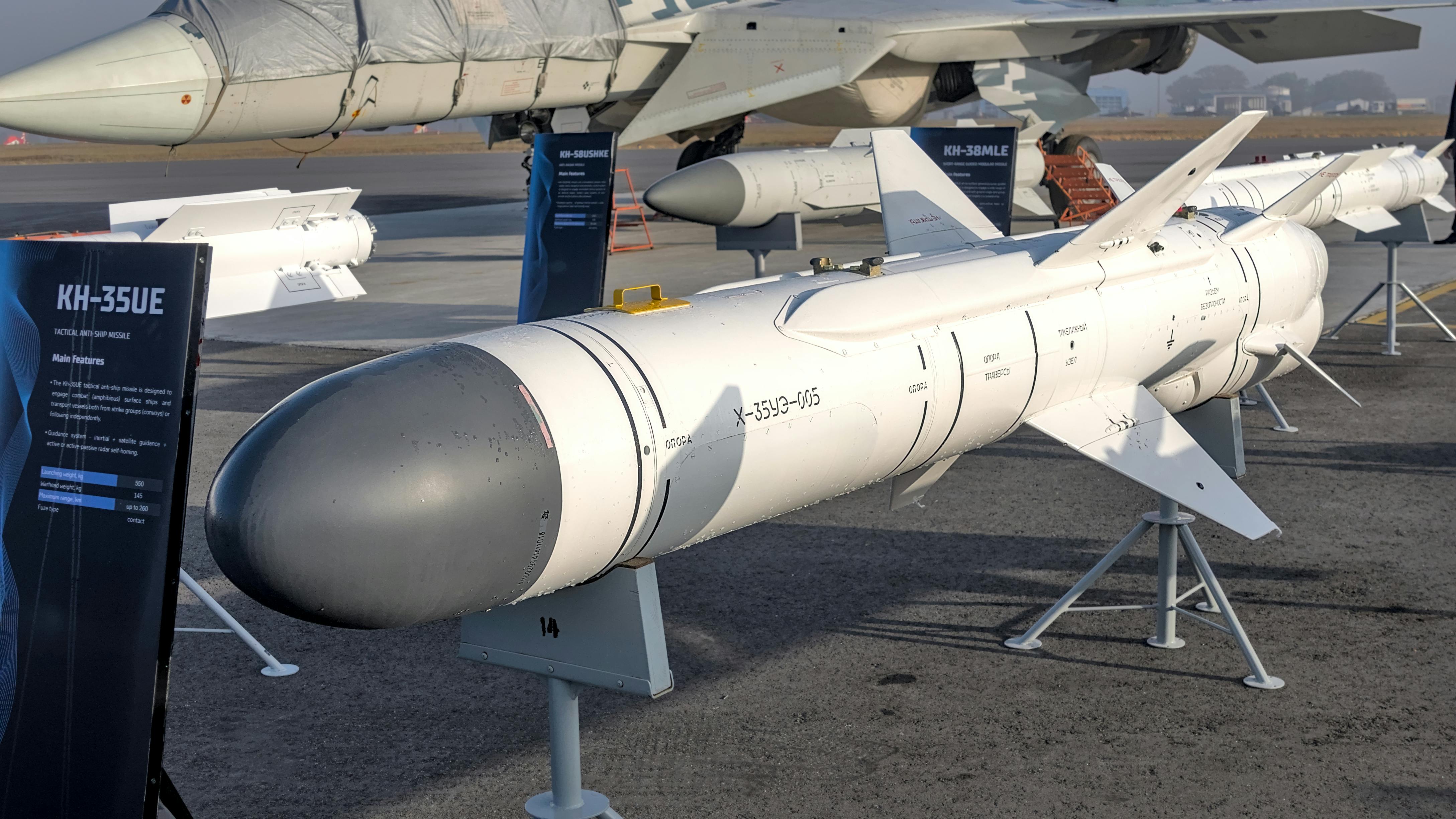
What Is the R-37M?
The R-37M is a Russian long-range air-to-air missile designed to engage high-value aerial targets such as airborne early warning aircraft, tankers, electronic warfare platforms, and fighters operating at long distances.
It is among the longest-range operational air-to-air missiles currently known in public sources and is carried by aircraft including the MiG-31BM and Su-35.
Why Is Range Not the Whole Story?
When missile manufacturers mention a maximum range, that figure usually represents an ideal engagement under favourable flight conditions.
Actual combat performance depends on numerous operational factors including:
- Target speed.
- Target altitude.
- Target manoeuvres.
- Electronic warfare.
- Radar tracking quality.
- Weather conditions.
- Quality of target information.
Consequently, the maximum advertised range should not be interpreted as the distance at which every target can reliably be intercepted.
≠
Effective Combat Range
⬇
Depends on Target, Sensors & Battlefield Conditions
What Is the 'No-Escape Zone'?
Defence analysts often distinguish between maximum range and the No-Escape Zone (NEZ).
The NEZ is the region where a target has very limited ability to evade the incoming missile through manoeuvring or acceleration.
Outside this zone, the target may increase its chances of survival by turning away, changing altitude, using electronic countermeasures, or deploying decoys.
⬇
Missile Launch
⬇
No-Escape Zone
⬇
Highest Probability of Intercept
Why Are Off-Board Sensors Important?
Modern fighters no longer rely solely on their own onboard radar.
Instead, they increasingly receive targeting information from external sources such as:
- Airborne Early Warning & Control (AEW&C) aircraft.
- Ground-based radar networks.
- Military satellites.
- Other friendly fighter aircraft.
- Secure battlefield data links.
This allows a fighter to launch a missile using information gathered by another platform, reducing the need to expose itself by continuously transmitting radar signals.
What Is Network-Centric Warfare?
Network-centric warfare connects sensors, aircraft, radars, command centres, and weapon systems into one integrated battlefield network.
Rather than fighting independently, every platform contributes information that improves the effectiveness of the entire force.
⬇
AEW&C Aircraft
⬇
Fighter Aircraft
⬇
Long-Range Missile
Why Are Data Links Becoming So Important?
Secure military data links continuously exchange battlefield information between different platforms.
These networks help pilots receive:
- Updated target positions.
- Threat warnings.
- Friendly aircraft locations.
- Missile guidance updates.
- Electronic warfare information.
As a result, overall combat effectiveness depends on the quality of information as much as on the missile itself.
How Do Modern Air Combat Systems Work Together?
Today's air battles are increasingly fought by integrated systems rather than individual aircraft.
| System | Primary Role |
|---|---|
| AEW&C Aircraft | Long-range airborne surveillance |
| Fighter Aircraft | Engagement platform |
| Data Links | Information sharing |
| Electronic Warfare | Protect friendly forces and disrupt opponents |
| Long-Range Missile | Target interception |
Why Do Integrated Networks Matter?
Military analysts increasingly emphasize that an advanced missile achieves its full potential only when supported by:
- Reliable airborne surveillance.
- Continuous target tracking.
- Secure communications.
- Electronic warfare protection.
- Rapid command and control.
Without these supporting elements, even highly capable missiles may not achieve their maximum operational effectiveness.
The Engineering Perspective
A long-range air-to-air engagement involves far more than propulsion and aerodynamics. Radar engineering, guidance algorithms, inertial navigation, satellite positioning, encrypted communications, electronic counter-countermeasures, and high-speed onboard computing all work together to guide the missile toward its target. Modern missile performance is therefore inseparable from the quality of the supporting sensor network.
The Strategic Perspective
As countries modernize their air forces, emphasis is shifting from acquiring individual weapons to building integrated combat ecosystems. Investments in airborne warning aircraft, secure military communications, electronic warfare, artificial intelligence, and network-centric operations increasingly determine overall combat capability. Missile procurement therefore represents only one part of a much broader modernization strategy.
Conclusion
Reports regarding India's possible interest in the R-37M highlight a broader discussion in modern air warfare. While long-range missiles significantly enhance a fighter's capabilities, their effectiveness ultimately depends on the quality of the surrounding surveillance, communication, and command network. As air combat continues to evolve, integrated battlefield awareness and network-centric operations are becoming just as important as the missile itself.



0 Comments