How Is DRDO's Archer-NG Transforming from a Surveillance Drone into a Combat Warrior?
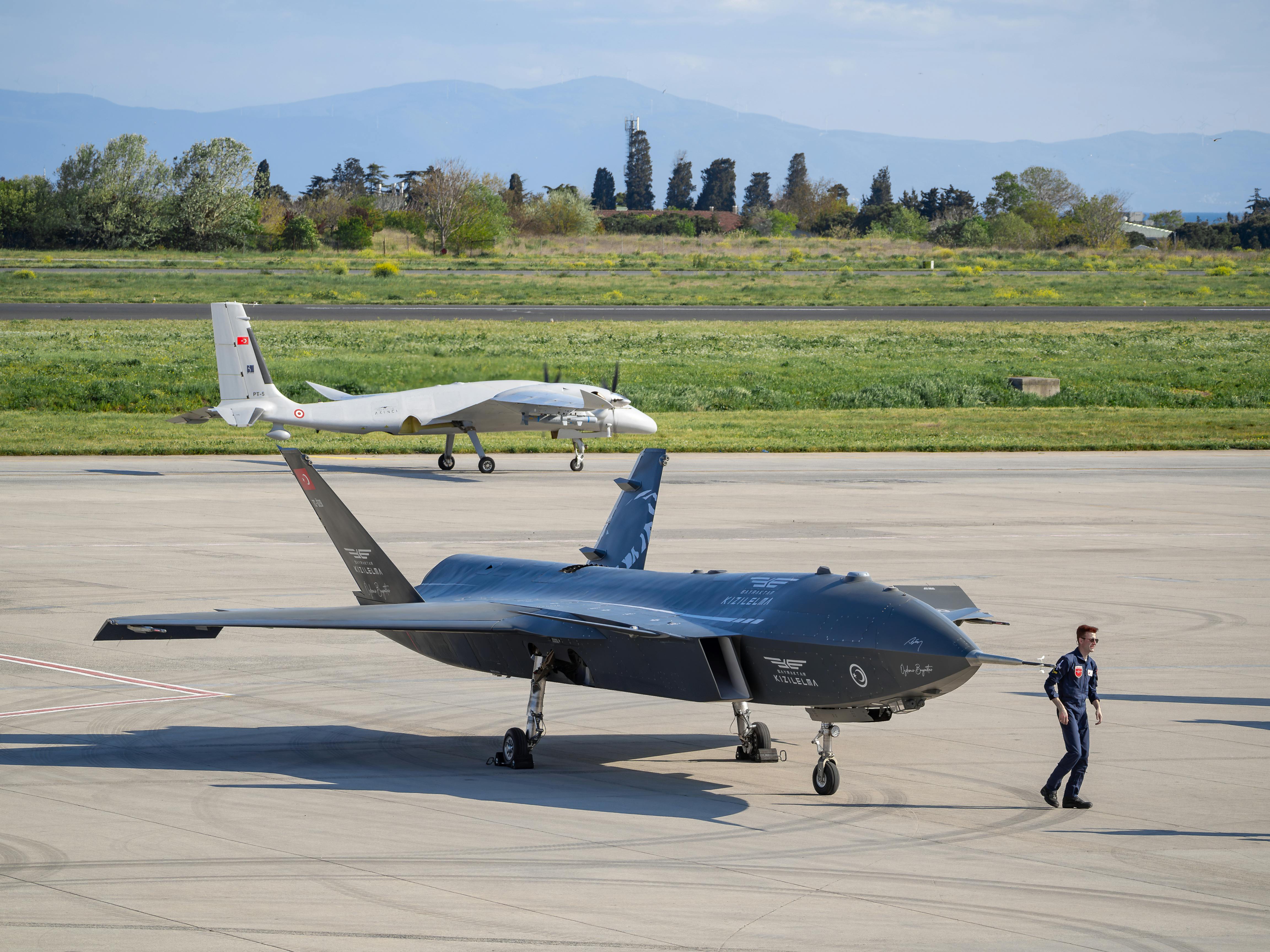
What Is Archer-NG?
Archer-NG (Next Generation) is an indigenous Medium-Altitude Long-Endurance (MALE) Unmanned Aerial Vehicle being developed by India's Defence Research and Development Organisation (DRDO).
The platform was originally designed for Intelligence, Surveillance, and Reconnaissance (ISR) missions, providing military commanders with continuous battlefield awareness.
However, its development has expanded beyond surveillance, with ongoing work aimed at enabling precision strike and multi-role combat operations.
Why Is Archer-NG Important?
Modern warfare increasingly relies on persistent surveillance, rapid information sharing, and precision engagement rather than traditional platform-centric operations.
Archer-NG is being developed to support these evolving operational requirements by combining surveillance and strike capabilities within a single unmanned platform.
⬇
Long-Endurance Surveillance
⬇
Target Detection
⬇
Real-Time Intelligence
⬇
Precision Engagement
Advanced Surveillance Systems
The current phase of Archer-NG development focuses heavily on improving its intelligence-gathering capabilities.
The platform is expected to integrate several advanced sensors, including:
- High-resolution Electro-Optical (EO) cameras.
- Infrared (IR) imaging systems.
- Synthetic Aperture Radar (SAR).
- Secure high-bandwidth communication links.
- Real-time battlefield data transmission systems.
Together, these systems are designed to provide commanders with continuous situational awareness during both day and night operations.
Long Endurance and High-Altitude Operations
One of Archer-NG's defining features is its expected ability to remain airborne for extended periods.
| Performance Parameter | Expected Capability |
|---|---|
| Mission Endurance | More than 18 hours |
| Operating Altitude | Above 30,000 feet |
| Mission Profile | ISR and Multi-role Operations |
Extended endurance enables the UAV to monitor large operational areas without frequent refueling or replacement.
From Surveillance to Precision Strike
A major aspect of Archer-NG's evolution is its planned transition into an armed unmanned combat platform.
The UAV is being configured to carry a variety of precision weapons, including:
- Precision-guided munitions.
- Anti-tank guided missiles (ATGMs).
- Air-to-air weapons.
- Counter-UAV engagement systems.
This transformation allows a single platform to detect, identify, track, and engage targets without requiring separate strike aircraft.
⬇
Identify
⬇
Track
⬇
Authorize
⬇
Precision Strike
Artificial Intelligence Integration
Future versions of Archer-NG are expected to incorporate artificial intelligence to enhance mission effectiveness.
Potential AI-enabled capabilities include:
- Automatic target recognition.
- Intelligent threat prioritization.
- Autonomous mission assistance.
- Faster decision support.
- Improved battlefield awareness.
AI can reduce operator workload while improving the speed and accuracy of target identification.
Swarming Operations
Another significant area of development is drone swarming.
Swarming enables multiple unmanned systems to coordinate their actions through secure communications and intelligent algorithms.
Potential advantages include:
- Area surveillance.
- Distributed sensing.
- Target sharing.
- Mission redundancy.
- Improved operational flexibility.
⬇
Information Sharing
⬇
Coordinated Decision Making
⬇
Network-Centric Operations
What Is a "Sensor-Shooter Node"?
Traditionally, surveillance drones only collected intelligence, while separate aircraft carried out attacks.
The emerging concept of a sensor-shooter node combines both functions within a single platform.
Such a UAV can:
- Observe the battlefield.
- Identify targets.
- Transmit intelligence.
- Receive mission updates.
- Engage authorized targets.
This integration significantly shortens the time between target detection and engagement.
Supporting Network-Centric Warfare
Future battlefields increasingly depend on interconnected platforms rather than isolated weapon systems.
Archer-NG is expected to operate alongside:
- Manned fighter aircraft.
- Ground command centers.
- Other unmanned aerial systems.
- Air defence networks.
- Battlefield communication systems.
Such integration improves coordination and enables faster decision-making across multiple operational domains.
Potential Operational Benefits
- Persistent battlefield surveillance.
- Long-duration intelligence gathering.
- Reduced risk to human pilots.
- Rapid precision strike capability.
- Improved situational awareness.
- Enhanced operational flexibility.
- Greater indigenous defence capability.
The Engineering Perspective
Developing a modern combat UAV requires expertise across aerodynamics, avionics, propulsion, artificial intelligence, communications, guidance systems, sensor fusion, electronic warfare, and precision weapon integration. The challenge lies not only in flying autonomously for long durations but also in processing vast amounts of battlefield data while maintaining secure communications and reliable mission performance.
The Strategic Perspective
Around the world, unmanned aerial systems are becoming central to military operations because they combine intelligence collection, precision engagement, and networked decision-making within a single platform. Indigenous development of systems such as Archer-NG contributes to technological self-reliance while supporting future concepts of network-centric and multi-domain warfare.
Conclusion
The Archer-NG reflects India's ongoing effort to develop an indigenous unmanned combat capability suited to the demands of modern warfare. By combining long-endurance surveillance, advanced sensors, artificial intelligence, network-centric connectivity, and planned precision-strike capabilities, the platform is evolving from a traditional ISR drone into a versatile multi-role combat system. As development progresses, Archer-NG has the potential to strengthen India's indigenous defence ecosystem while contributing to future concepts of autonomous and information-driven military operations.



0 Comments