Tiny Sensor, Massive Power: How Accelerometers Are Controlling the Skies
Modern aerospace systems—from fighter jets to satellites—depend on one tiny but powerful device: the accelerometer.
This small sensor is responsible for measuring motion, detecting forces, and enabling precision navigation without GPS.
Without accelerometers, modern aviation and space exploration would simply not function.
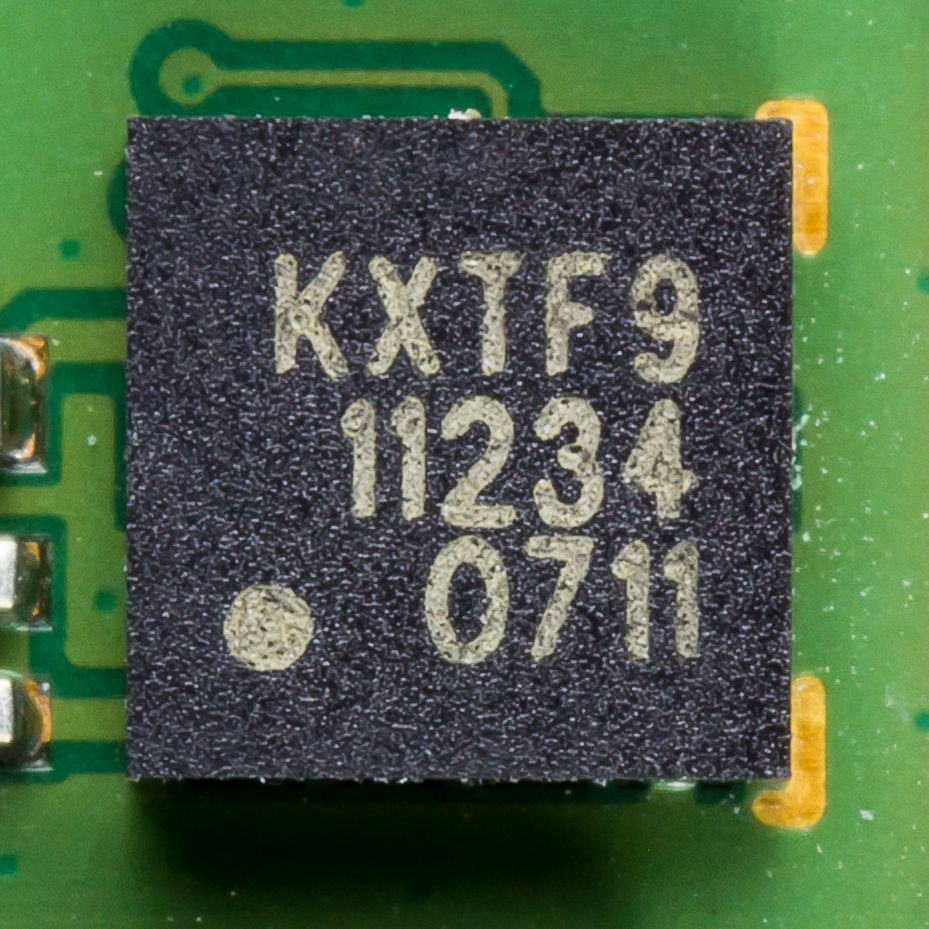
Miniature accelerometers are the core sensors behind navigation, stability, and control in aerospace systems
---What is an Accelerometer?
An accelerometer is a sensor that measures linear acceleration (change in velocity) in one or more directions.
It detects motion along three axes—X, Y, and Z—allowing systems to understand movement and orientation in space.
• Measure acceleration forces
• Detect orientation & tilt
• Monitor vibration & movement
• Enable navigation without external signals
How Accelerometers Work
At the heart of every accelerometer is a tiny internal mass (proof mass).
When acceleration occurs, this mass shifts slightly, causing a change in electrical properties such as capacitance, resistance, or voltage.
This change is converted into digital signals that represent motion.
• Acceleration → mass displacement
• Displacement → electrical signal change
• Signal → processed into motion data
Modern systems use 3-axis accelerometers, measuring motion in all directions simultaneously.
---Internal Structure
Most aerospace accelerometers use MEMS (Micro-Electro-Mechanical Systems) technology.
These are tiny silicon-based devices combining mechanical and electronic components.
| Component | Function |
|---|---|
| Proof Mass | Moves under acceleration |
| Spring System | Controls movement of mass |
| Sensors (Capacitive/Piezo) | Detect displacement |
| Circuitry | Converts signals to data |
MEMS accelerometers are widely used because they are compact, highly sensitive, and durable.
---Role in Aerospace Industry
Accelerometers are at the core of inertial navigation systems (INS).
These systems calculate position, velocity, and orientation without external references.
• Aircraft navigation & autopilot
• Missile guidance systems
• Satellite motion tracking
• Flight testing & stability analysis
They are especially critical in environments where GPS signals are unavailable or jammed.
---Integration with IMU Systems
Accelerometers are rarely used alone—they are combined with gyroscopes in Inertial Measurement Units (IMUs).
These systems provide complete motion tracking, including rotation and orientation.
This combination allows aircraft and missiles to maintain precise control even in extreme conditions.
---Why Accelerometers Are Game-Changers
Accelerometers have transformed aerospace engineering by enabling:
• Autonomous navigation
• Real-time stability control
• High-precision targeting
• Safer flight operations
They allow machines to “feel” motion—just like humans sense balance.
---Future of Accelerometers in Aerospace
Next-generation accelerometers are becoming:
• Smaller and more powerful
• Resistant to extreme environments
• Capable of ultra-precise measurements
Advanced systems are even being developed for deep space missions and gravitational sensing.
---Conclusion
Accelerometers may be tiny—but their impact on aerospace is massive.
They are the invisible sensors that keep aircraft stable, missiles accurate, and spacecraft on course.
In modern aerospace, control is everything—and accelerometers are at the heart of that control.



