Urban Warfare: Why Cities are the Battlegrounds of the Future
Strategic Horizon – Modern Warfare Series
For most of human history, wars were fought in open fields, deserts, forests, and along national borders. However, the nature of conflict is changing rapidly. Today, the world's population is moving into cities at an unprecedented rate, and this shift is transforming how wars are fought. As military strategists increasingly recognize, the battlefields of the future will not be empty plains but dense urban environments filled with buildings, infrastructure, and civilians.
By 2030, a majority of the global population will live in cities, meaning that political power, economic resources, and critical infrastructure will be concentrated in urban areas. Wherever these centers of power exist, conflicts are likely to follow.
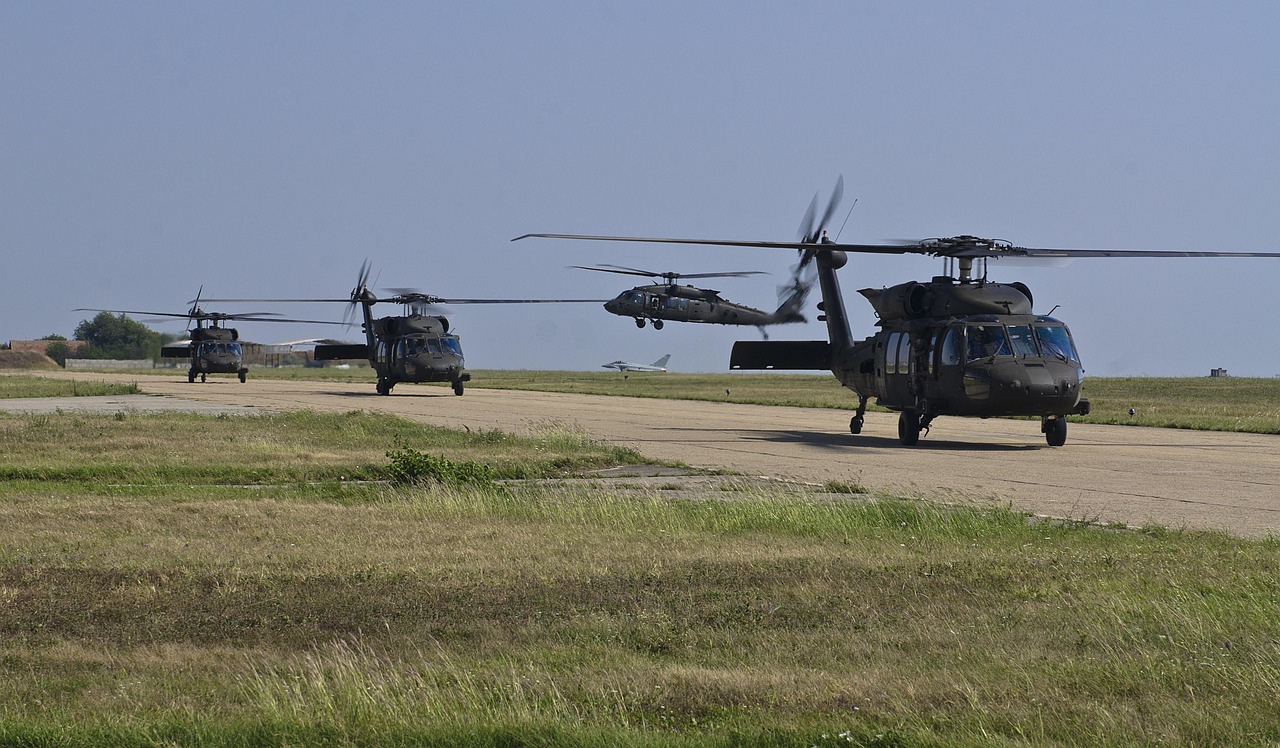
Military helicopter operations in dense operational environments
The Rise of the Urban Battlefield
Cities have always been important strategic targets, but modern urbanization has elevated their significance dramatically. Megacities with populations exceeding ten million people are becoming hubs of politics, commerce, and communication.
When conflicts erupt, controlling these urban centers becomes critical. Military forces must therefore operate in environments filled with skyscrapers, narrow streets, underground tunnels, and dense civilian populations. These conditions transform cities into complex three-dimensional battlefields unlike anything found in traditional warfare.
Urban warfare often turns buildings into fortresses and streets into dangerous corridors where ambushes, sniper fire, and improvised explosive devices become common threats. The terrain frequently favors defenders, making city battles extremely costly for attacking forces.
Why Cities Favor the Defender
One of the most defining features of urban warfare is that defenders usually possess a significant advantage. Buildings provide cover, elevation, and concealment. Defenders can move through hidden routes such as basements, tunnels, and interconnected structures, allowing them to launch surprise attacks against advancing troops.
Tactics like moving through holes blasted between buildings—known as “mouse-holing”—allow soldiers to advance without exposing themselves to enemy fire in open streets.
For attacking forces, every building can become a mini fortress that must be cleared room by room. Progress is often measured not in kilometers but in individual blocks or even single buildings.
Urban Warfare in Modern Conflicts

Recent conflicts have demonstrated how brutal and complex urban warfare can become. Cities such as Aleppo, Mosul, Gaza, and Bakhmut have witnessed intense house-to-house fighting and prolonged sieges.
In the war in Ukraine, the battle for Bakhmut turned into one of the fiercest urban battles in Europe in decades, with both sides suffering heavy casualties as they fought for control of the city.
Urban combat places extraordinary demands on soldiers. They must navigate buildings, stairwells, rooftops, underground tunnels, and streets simultaneously while remaining alert to threats from every direction.
Technology Transforming Urban Combat
Modern technology is reshaping how armies operate in cities. Drones now provide aerial surveillance above dense urban environments, while advanced sensors allow forces to detect movement inside buildings.
Artificial intelligence, robotic systems, and autonomous drones may soon play a major role in urban combat operations. Swarm robotics and unmanned ground vehicles could be deployed to scout buildings, clear tunnels, and gather intelligence without risking human soldiers.
In this new environment, information dominance and situational awareness will become as important as firepower.
Humanitarian Challenges
Urban warfare also presents enormous humanitarian challenges. Cities contain large civilian populations, hospitals, schools, and critical infrastructure. Combat in such environments can lead to severe civilian casualties and widespread destruction.
Military planners must therefore balance tactical objectives with the need to minimize damage to civilian life and infrastructure, making urban warfare not only a military challenge but also a political and humanitarian one.
The Future of Warfare
As global urbanization continues, military strategists increasingly believe that cities will become the primary arenas of future conflict. Armed forces around the world are adapting their doctrines, training, and equipment to prepare for operations in dense urban environments.
Future wars may involve drones flying between skyscrapers, autonomous robots navigating underground tunnels, and soldiers fighting in environments where every building can hide an enemy.
Conclusion
Urban warfare represents one of the most complex and demanding forms of combat ever faced by modern militaries. Dense infrastructure, civilian populations, and the three-dimensional nature of cities create challenges that traditional battlefields never presented.
As the world's population increasingly concentrates in urban centers, the cities that once symbolized civilization and economic power may also become the defining battlegrounds of the wars of the future.



